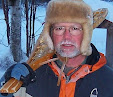
The Year 2008 will go down in history as the Year of the Walleye.
We caught walleyes like crazy right up to the middle of September. Average size from late June to early August was about 22 inches. Largest walleye brought into camp was a 29-incher but there could have been larger ones released out on the water.
We also caught some huge lake trout, mostly while fishing for walleye, but the largest, reported to be a 52-incher, was caught by our anglers looking for lake trout.
Trout must be live-released on Red Lake and must also be angled using lures with single, barbless hooks, without bait. These anglers were fishing in late June and were using large bucktail jigs with the barbs pinched down when they tied into the humungous trout.
In proper conservation fashion, they didn't even bring the fish aboard, just alongside the boat where they held its tail at the transom and made a mark on the side of the boat where its head reached. They then extracted the jig from the fish's mouth and let it swim away. On reaching camp they got a tape and discovered the fish was 52 inches. That's a record for us. Our previous largest trout was 45 inches and that was tied again this summer. Some of these 40+inch trout have weighed over 40 pounds.
These latest anglers were here in September and were fishing for walleyes when the giant trout bit their walleye spinner. It was quite a feat to get the lunker into the boat using light line meant for walleyes but they did so and grabbed a photo before releasing the fish.
Anglers caught lake trout all summer while fishing for walleyes and northern pike. It's not known why these normally deepwater fish were up in the shallows but the likely reason was the water stayed cool. We had a late spring, lots of rain in the early summer, and the lake never really warmed up.
That same weather phenomena might explain why northern pike were not at their best most of the summer. We did get some 45-inchers but in general the pike weren't as abundant as usual. The "eaters" that folks brought us to clean had been eating crayfish just about the whole summer. That's unusual. They usually only eat crayfish for a couple of weeks in mid-summer. The best pike fishing came late in the year when they were back in the regular haunts and eating their usual things, like white suckers and walleyes.
Click to go back to our website: www.bownarrows.com
Click to see the latest on the blog: www.bownarrows.blogspot.com
Thursday, October 23, 2008


Tuesday, October 21, 2008
Early Winter Visitors Arrive
There are small flocks of snow birds or more properly, snow buntings, in the yard at camp this morning.
These cheery medium-sized songbirds always appear just ahead of the winter snow.
Yesterday the lake was still as glass and I could see schools of fish breaking the surface in the narrows.
They were probably tulibee or lake herring which we have seen other years forming spawning "balls" in which females and males release their eggs and milt in open water and just let the eggs fall to the bottom.
All the leaves have fallen and the yard looks like it is covered in giant corn flakes.
Other than the snow birds which are migrating from the Arctic tundra to the south, about the only birds around now are bald eagles, ravens and whiskey jacks (Canada Jays).
There is a bite in the air that makes us want to cozy up to the wood stove at night.
Click to go back to our website: http://www.bownarrows.com/
Click to see the latest on the blog: http://www.bownarrows.blogspot.com/
\
These cheery medium-sized songbirds always appear just ahead of the winter snow.
Yesterday the lake was still as glass and I could see schools of fish breaking the surface in the narrows.
They were probably tulibee or lake herring which we have seen other years forming spawning "balls" in which females and males release their eggs and milt in open water and just let the eggs fall to the bottom.
All the leaves have fallen and the yard looks like it is covered in giant corn flakes.
Other than the snow birds which are migrating from the Arctic tundra to the south, about the only birds around now are bald eagles, ravens and whiskey jacks (Canada Jays).
There is a bite in the air that makes us want to cozy up to the wood stove at night.
Click to go back to our website: http://www.bownarrows.com/
Click to see the latest on the blog: http://www.bownarrows.blogspot.com/
\
Sunday, October 19, 2008
Whew! What a month!
It's hard to believe a month has passed since my last posting.
Time seems to be flying by. Some of it is the season -- daylight hours are considerably fewer than 12 now -- and some of it is all the years I've been on the planet. Time speeds up as you get older. What once were hours are now minutes and weeks are now days.
Brenda and I have been totally occupied for the past three weeks with putting camp to bed for the winter and also with the Ministry of Natural Resources lake trout study and rehabilitation project.
Lake trout reproduction slowed to a trickle here about 20 years ago and to date, no one has a clue as to why.
A graduate biology student from the University of Manitoba may now hold the best promise for solving the riddle. Leslie Carroll and her advisors at the university have a number of experiments underway to figure out why the trout are not successfully spawning in Pipestone Bay.
She is working closely with MNR area biologist Nadine Thebeau who has been studying the problem for years and has eliminated all the likely possiblities.
In the meantime, while Leslie and Nadine continue exploring, the MNR is capturing wild lake trout from Pipestone Bay each fall, stripping them of eggs and milt and raising the eggs in a hatchery at Dorion, near Thunder Bay.
They are planting about 80,000 fingerlings back into Red Lake each year so that the population remains viable.
This year the MNR also did a lake trout assessment in which they netted, tagged and released as many trout as they could to get a population estimate. The same study has been done in the past. It was good to hear that many of the trout caught by the netters this year were untagged and that quite a lot of them were young fish. Only one might have been a stocked fish. Stocked fish have a clipped fin. The fin varies from year to year so it is easy to tell what year a fish was stocked. The fact that many young fish were caught indicates that the trout are reproducing somewhere. But the overall level of reproduction is still way below what it used to be.
Brenda and I play a support role in the study. We provide lodging and meals to the MNR staff who can number up to 12 during the several days it takes to gather the eggs (known as the "spawning") for the hatchery. I'm sure the general public would be surpised to see all the people involved in the spawning as well as the trout study. Besides Nadine and this year, Leslie, there are all sorts of MNR fish and wildlife techs, fire techs, conservation officers, supervisors and just about everybody else in the Red Lake office.
Their dedication to this task is truly impressive. They work in all sorts of weather, pulling heavy nets into their boats and, eventually, stripping the eggs and milt from the fish right here on the dock at camp.
They've pretty much got it down to a science now.
So that's what we've been doing and, oh yes, I also went moose hunting for a week. I have been hunting with my two brothers-in-law for about 25 years now. This year we got a spike bull moose which is about perfect for us. We don't look forward to carrying massive quarters of big moose any more. Besides, young moose "eat better."
Brenda and I will be pulling the plug on the season very shortly.
We're beat and we need a rest. It will be good to get home again.
Click to return to our website: http://www.bownarrows.com/
Click to see the latest on the blog: http://www.bownarrows.blogspot.com/
Time seems to be flying by. Some of it is the season -- daylight hours are considerably fewer than 12 now -- and some of it is all the years I've been on the planet. Time speeds up as you get older. What once were hours are now minutes and weeks are now days.
Brenda and I have been totally occupied for the past three weeks with putting camp to bed for the winter and also with the Ministry of Natural Resources lake trout study and rehabilitation project.
Lake trout reproduction slowed to a trickle here about 20 years ago and to date, no one has a clue as to why.
A graduate biology student from the University of Manitoba may now hold the best promise for solving the riddle. Leslie Carroll and her advisors at the university have a number of experiments underway to figure out why the trout are not successfully spawning in Pipestone Bay.
She is working closely with MNR area biologist Nadine Thebeau who has been studying the problem for years and has eliminated all the likely possiblities.
In the meantime, while Leslie and Nadine continue exploring, the MNR is capturing wild lake trout from Pipestone Bay each fall, stripping them of eggs and milt and raising the eggs in a hatchery at Dorion, near Thunder Bay.
They are planting about 80,000 fingerlings back into Red Lake each year so that the population remains viable.
This year the MNR also did a lake trout assessment in which they netted, tagged and released as many trout as they could to get a population estimate. The same study has been done in the past. It was good to hear that many of the trout caught by the netters this year were untagged and that quite a lot of them were young fish. Only one might have been a stocked fish. Stocked fish have a clipped fin. The fin varies from year to year so it is easy to tell what year a fish was stocked. The fact that many young fish were caught indicates that the trout are reproducing somewhere. But the overall level of reproduction is still way below what it used to be.
Brenda and I play a support role in the study. We provide lodging and meals to the MNR staff who can number up to 12 during the several days it takes to gather the eggs (known as the "spawning") for the hatchery. I'm sure the general public would be surpised to see all the people involved in the spawning as well as the trout study. Besides Nadine and this year, Leslie, there are all sorts of MNR fish and wildlife techs, fire techs, conservation officers, supervisors and just about everybody else in the Red Lake office.
Their dedication to this task is truly impressive. They work in all sorts of weather, pulling heavy nets into their boats and, eventually, stripping the eggs and milt from the fish right here on the dock at camp.
They've pretty much got it down to a science now.
So that's what we've been doing and, oh yes, I also went moose hunting for a week. I have been hunting with my two brothers-in-law for about 25 years now. This year we got a spike bull moose which is about perfect for us. We don't look forward to carrying massive quarters of big moose any more. Besides, young moose "eat better."
Brenda and I will be pulling the plug on the season very shortly.
We're beat and we need a rest. It will be good to get home again.
Click to return to our website: http://www.bownarrows.com/
Click to see the latest on the blog: http://www.bownarrows.blogspot.com/
Wednesday, September 17, 2008
The Zen of Grouse Hunting

If there is a more soul-satisfying activity than hunting ruffed grouse in Northwestern Ontario in the fall, I haven't discovered it.
So far I have honored a commitment to myself and my Chocolate Lab, Sam, to get out grouse hunting every day.
After a fishing season where Brenda and I and our staff have worked 24/7 for months, the time I spend with Sam walking quietly over trails while crimson and yellow leaves are falling all around us is worth more than all the gold and diamonds in the world.
Yesterday we explored a new trail left by prospectors and were fascinated by all the tracks of moose and deer we found. So fascinated, in fact, that I was totally unprepared for the thunderous whirr of a grouse taking off right at my feet. By the time I remembered I was carrying a shotgun this grey-tail variety bird was gliding out of sight. We could have pursued him but decided to stick to the trail instead and see what lay ahead.
The autumn leaves are slow to change color this year. Despite what the expert say about frost having nothing to do with this annual event, anyone who lives in the bush knows that a frost will make the entire forest explode with brilliant golds and reds within a few days.
There have been many flocks of snow geese and sandhill cranes passing overhead. They are going from their summer breeding grounds on Hudson Bay west to Manitoba where they will rest and feed before heading south for the winter.
They mostly don't land here at Red Lake unless they encounter bad weather or head winds.
We are approaching our last week of fishing for the season. The weather has been beautiful with highs in the 60s F (17 C) and quite dry.
The morning air smells of wood smoke as our guests build fires in the stoves in their cabins.
It's a fine way to end the season.
Click to return to our website: http://www.bownarrows.com/
Click to see the latest on the blog: http://www.bownarrows.blogspot.com/
So far I have honored a commitment to myself and my Chocolate Lab, Sam, to get out grouse hunting every day.
After a fishing season where Brenda and I and our staff have worked 24/7 for months, the time I spend with Sam walking quietly over trails while crimson and yellow leaves are falling all around us is worth more than all the gold and diamonds in the world.
Yesterday we explored a new trail left by prospectors and were fascinated by all the tracks of moose and deer we found. So fascinated, in fact, that I was totally unprepared for the thunderous whirr of a grouse taking off right at my feet. By the time I remembered I was carrying a shotgun this grey-tail variety bird was gliding out of sight. We could have pursued him but decided to stick to the trail instead and see what lay ahead.
The autumn leaves are slow to change color this year. Despite what the expert say about frost having nothing to do with this annual event, anyone who lives in the bush knows that a frost will make the entire forest explode with brilliant golds and reds within a few days.
There have been many flocks of snow geese and sandhill cranes passing overhead. They are going from their summer breeding grounds on Hudson Bay west to Manitoba where they will rest and feed before heading south for the winter.
They mostly don't land here at Red Lake unless they encounter bad weather or head winds.
We are approaching our last week of fishing for the season. The weather has been beautiful with highs in the 60s F (17 C) and quite dry.
The morning air smells of wood smoke as our guests build fires in the stoves in their cabins.
It's a fine way to end the season.
Click to return to our website: http://www.bownarrows.com/
Click to see the latest on the blog: http://www.bownarrows.blogspot.com/
Monday, September 8, 2008
Fall bird migrations have begun
We've seen and heard the first flocks of snow geese and sandhill cranes in the last couple of days.
It won't be long before the sky is filled with the Vs of these magnificent birds as they make their way from Hudson Bay to the southern U.S.
The weather is decidedly fall-like now with daytime highs in the 50s and 60s. We still have not had a frost.
A cold front that went through over the weekend slowed down the walleye bite but it should be back on by today. The trick for us is to get our fishermen -- almost everybody in camp this week is new -- to go back and fish the places we sent them earlier but which didn't produce anything due to the cold front's effects. The best fishermen have poor memories. They keep trying the tried-and-proven fishing spots until they connect with the fish.
Fish here move with the wind, move with the weather conditions and move with the season.
After 50 years of fishing this lake we have a pretty good idea where they are going to be and at what time although we also learn something new every day as well.
I would suggest walleye fishermen coming here the next few weeks buy some nightcrawlers at places like Fort Frances, Vermilion Bay and Ear Falls as they are becoming difficult to find at Red Lake bait dealers. You only need a piece of worm on a jig to catch a walleye and so can catch many fish on each whole worm. With minnows, you need one minnow per fish. Minnows also die far easier.
Live bait is now working considerably better than Gulp Alive but there seems to be no preference about the kind of live bait. Worms, leeches and minnows are all working.
Spinners are still the favorite of northern pike. Make sure you have #4 and #5 Mepps and Blue Fox models. Gold and orange are still good colors.
Click to go back to our website: http://www.bownarrows.com/
Click to see the latest on the blog: www.bownarrows.blogspot.com
It won't be long before the sky is filled with the Vs of these magnificent birds as they make their way from Hudson Bay to the southern U.S.
The weather is decidedly fall-like now with daytime highs in the 50s and 60s. We still have not had a frost.
A cold front that went through over the weekend slowed down the walleye bite but it should be back on by today. The trick for us is to get our fishermen -- almost everybody in camp this week is new -- to go back and fish the places we sent them earlier but which didn't produce anything due to the cold front's effects. The best fishermen have poor memories. They keep trying the tried-and-proven fishing spots until they connect with the fish.
Fish here move with the wind, move with the weather conditions and move with the season.
After 50 years of fishing this lake we have a pretty good idea where they are going to be and at what time although we also learn something new every day as well.
I would suggest walleye fishermen coming here the next few weeks buy some nightcrawlers at places like Fort Frances, Vermilion Bay and Ear Falls as they are becoming difficult to find at Red Lake bait dealers. You only need a piece of worm on a jig to catch a walleye and so can catch many fish on each whole worm. With minnows, you need one minnow per fish. Minnows also die far easier.
Live bait is now working considerably better than Gulp Alive but there seems to be no preference about the kind of live bait. Worms, leeches and minnows are all working.
Spinners are still the favorite of northern pike. Make sure you have #4 and #5 Mepps and Blue Fox models. Gold and orange are still good colors.
Click to go back to our website: http://www.bownarrows.com/
Click to see the latest on the blog: www.bownarrows.blogspot.com
Monday, September 1, 2008
Fall weather may finally be coming
The unseasonally warm weather may be on the way out tonight.
It has been near 80 F (27C) here the last few days but there is a major cold front coming through tonight.
We love the heat -- there isn't that much of it up here -- but it will be nice to have some cool nights for sleeping again.
Meanwhile, the walleye extravanza continues. Everybody in camp is catching walleyes on whatever bait they fish with -- minnows, worms, leeches, Gulp Alive, chewing gum!
It would seem every walleye in the entire lake system is right near our camp. All you need to do is to get your jig or spinner and bait to the bottom in 20-30 feet of water.
The northern pike are back in a big way too. Lots of pike in the 30+inch range are being caught and the fish can be found right in the weeds again.
Virtually anything is working for pike but gold or yellow spinners like the Mepps #4 and #5 and Blue Fox #5 are still good.
The Acme Castmaster spoon in silver with chartreuse also did well last week. It also caught walleyes!
I was able to slip away from camp for a couple of hours last week and was lucky enough to land a 39-inch pike on a #4 Mepps. What made it all the more interesting was another fish of similar size was following the one I caught and released.
Click to go back to our website: www.bownarrows.com
Click to see the latest blog entry: www.bownarrows.blogspot.com
It has been near 80 F (27C) here the last few days but there is a major cold front coming through tonight.
We love the heat -- there isn't that much of it up here -- but it will be nice to have some cool nights for sleeping again.
Meanwhile, the walleye extravanza continues. Everybody in camp is catching walleyes on whatever bait they fish with -- minnows, worms, leeches, Gulp Alive, chewing gum!
It would seem every walleye in the entire lake system is right near our camp. All you need to do is to get your jig or spinner and bait to the bottom in 20-30 feet of water.
The northern pike are back in a big way too. Lots of pike in the 30+inch range are being caught and the fish can be found right in the weeds again.
Virtually anything is working for pike but gold or yellow spinners like the Mepps #4 and #5 and Blue Fox #5 are still good.
The Acme Castmaster spoon in silver with chartreuse also did well last week. It also caught walleyes!
I was able to slip away from camp for a couple of hours last week and was lucky enough to land a 39-inch pike on a #4 Mepps. What made it all the more interesting was another fish of similar size was following the one I caught and released.
Click to go back to our website: www.bownarrows.com
Click to see the latest blog entry: www.bownarrows.blogspot.com
Friday, August 22, 2008
Fall Fishing on Red Lake, Ontario
It's ironic to think that fall fishing is beginning here at Bow Narrows Camp on Red Lake, Ontario right after we've experienced two of the warmest weeks all summer, but the calendar shows August is nearly gone.
Fishermen (and women; there were several couples here this week) will attest the walleye action last week was out of this world. People caught walleyes whether they were trolling crankbaits or back-trolling Little Joes with bait. Walleyes were everywhere from six to 26-feet of water and came in all sizes, from pint-sized to 28-inch lunkers.
Most people used nightcrawlers and Little Joe spinners and fished them behind bottom-bouncer sinkers . They had the very best success in 15-22 feet of water around the edges of the big water bodies. That's the recipe for the rest of the season now, although we are still also catching walleyes in shallow bays as well.
Northern pike are becoming more numerous but we're not seeing as many big jobs as in the past; however, that situation could be changing. We've noticed small white suckers in the stomachs of several of the pike we cleaned this week. Last season, when the pike turned to eating suckers, the fishing was great.
We've no idea where the pike disappeared to for awhile mid-summer but the ones we did catch had crayfish in their stomachs. They`ve been biting better and better every week for a month now.
The trees have started to change colors. It's a process that will take several weeks before all of them are yellow and red. This is about normal for this time of year.
The weather is still very warm, in the mid-70s to 80 F or 24-28 C.
Our very tame wild woodchuck, Gully, has hibernated! She`s the one seen with our chocolate Lab, Sam, and 0ur former cook`s border collie, Cole, on the Photo Gallery page of our website.
Woodchucks at camp hibernate when they get fat enough, not when the weather gets cold. Gully is a master at getting our staff and guests to give her pieces of bread to eat. By mid-August Gully has the shape of a bleach bottle and she settles into her den for a long winter`s nap.
Click to back to our website: www.bownarrows.com
Click to see the latest on the blog: www.bownarrows.blogspot.com
Fishermen (and women; there were several couples here this week) will attest the walleye action last week was out of this world. People caught walleyes whether they were trolling crankbaits or back-trolling Little Joes with bait. Walleyes were everywhere from six to 26-feet of water and came in all sizes, from pint-sized to 28-inch lunkers.
Most people used nightcrawlers and Little Joe spinners and fished them behind bottom-bouncer sinkers . They had the very best success in 15-22 feet of water around the edges of the big water bodies. That's the recipe for the rest of the season now, although we are still also catching walleyes in shallow bays as well.
Northern pike are becoming more numerous but we're not seeing as many big jobs as in the past; however, that situation could be changing. We've noticed small white suckers in the stomachs of several of the pike we cleaned this week. Last season, when the pike turned to eating suckers, the fishing was great.
We've no idea where the pike disappeared to for awhile mid-summer but the ones we did catch had crayfish in their stomachs. They`ve been biting better and better every week for a month now.
The trees have started to change colors. It's a process that will take several weeks before all of them are yellow and red. This is about normal for this time of year.
The weather is still very warm, in the mid-70s to 80 F or 24-28 C.
Our very tame wild woodchuck, Gully, has hibernated! She`s the one seen with our chocolate Lab, Sam, and 0ur former cook`s border collie, Cole, on the Photo Gallery page of our website.
Woodchucks at camp hibernate when they get fat enough, not when the weather gets cold. Gully is a master at getting our staff and guests to give her pieces of bread to eat. By mid-August Gully has the shape of a bleach bottle and she settles into her den for a long winter`s nap.
Click to back to our website: www.bownarrows.com
Click to see the latest on the blog: www.bownarrows.blogspot.com
Wednesday, August 13, 2008
Gorgeous weather; pike biting again
The weather the last couple of weeks has been spectacular: highs in the mid 70s F (25 C) and dry.
Northern pike are largely back in their old haunts such as weedbeds as well as around rocky shoals. Slightly larger lures than usual seem to be working as well as the smaller lures. Try spoons about 3/4 ounce such as Little Cleo, Dardevle, Doctor, Red Eye, in gold colors and with orange or red stripes.
Be careful not to get too big with the stick baits. Six-to-seven-inch stick baits like Rapala, Rebel, etc. are great, especially for trolling. Huge baits either catch nothing or nothing but little fish.
The Blue Fox #5 spinner in red and orange is a standout. Mepps #5 is also good as well as spinner baits and buzz baits.
Walleyes are mostly in the 20-25-foot range and are still being taken on bottom bouncers and Little Joe spinners with either worms or leeches. Many people are still using the 3-inch Gulp Alive leeches. Minnows are not yet necessary.
Click to go back to our website: http://www.bownarrows.com/
Click to see the latest on the blog: http://www.bownarrows.blogspot.com/
Northern pike are largely back in their old haunts such as weedbeds as well as around rocky shoals. Slightly larger lures than usual seem to be working as well as the smaller lures. Try spoons about 3/4 ounce such as Little Cleo, Dardevle, Doctor, Red Eye, in gold colors and with orange or red stripes.
Be careful not to get too big with the stick baits. Six-to-seven-inch stick baits like Rapala, Rebel, etc. are great, especially for trolling. Huge baits either catch nothing or nothing but little fish.
The Blue Fox #5 spinner in red and orange is a standout. Mepps #5 is also good as well as spinner baits and buzz baits.
Walleyes are mostly in the 20-25-foot range and are still being taken on bottom bouncers and Little Joe spinners with either worms or leeches. Many people are still using the 3-inch Gulp Alive leeches. Minnows are not yet necessary.
Click to go back to our website: http://www.bownarrows.com/
Click to see the latest on the blog: http://www.bownarrows.blogspot.com/
Monday, July 21, 2008
Wet and Wild Walleye Fishing
This is the walleye year of the century!
Walleye fishing this summer is nothing less than spectacular.
We are catching walleyes in all areas of the lake, at every depth, using every kind of lure and technique imaginable.
Anglers are catching so many 26-27 inch walleyes they are growing tired of the sport and go looking for northern pike instead. And when they do they are catching as many walleyes casting pike lures as they are pike.
The weather has been extremely wet the last three weeks. Make sure everyone in your group has excellent quality rainwear and rubber boots. You don't want to miss any of this fishing because you are waiting in the cabin for a sunny day.
The wet weather has also prevented us from getting on the Internet and updating this blog. From what we can tell the soggy ground let water into the buried telephone wire from our microwave tower to the lodge. The phone works but the signal is of such poor quality that we were unable to connect to our dial-up server.
If you have an urgent message you need answered, phone us rather than e-mailing.
Getting back to the walleye fishing. The very best success is coming from anglers using walleye spinners and live bait, either leeches or nightcrawlers, and backtrolling in about 22 feet of water.
For northern pike, #5 Blue Fox Spinners in red and gold colors are great. The fish are much deeper than usual. They are probably 8 feet deep instead of the usual 3-4. This may be a function of the flooded conditions on the lake which is about two feet higher than normal.
Rattle Traps and Rattlin Raps that dig down 6-feet or so on the retrieve are working good.
The weather seems to be changing of late and hopefully I will be able to update the blog more often as things dry up.
Click to go back to the website: http://www.bownarrows.com/
Click to see the latest on the blog: http://www.bownarrows.blogspot.com/
Phone numbers: 807-727-2730 and 807-727-0439
Walleye fishing this summer is nothing less than spectacular.
We are catching walleyes in all areas of the lake, at every depth, using every kind of lure and technique imaginable.
Anglers are catching so many 26-27 inch walleyes they are growing tired of the sport and go looking for northern pike instead. And when they do they are catching as many walleyes casting pike lures as they are pike.
The weather has been extremely wet the last three weeks. Make sure everyone in your group has excellent quality rainwear and rubber boots. You don't want to miss any of this fishing because you are waiting in the cabin for a sunny day.
The wet weather has also prevented us from getting on the Internet and updating this blog. From what we can tell the soggy ground let water into the buried telephone wire from our microwave tower to the lodge. The phone works but the signal is of such poor quality that we were unable to connect to our dial-up server.
If you have an urgent message you need answered, phone us rather than e-mailing.
Getting back to the walleye fishing. The very best success is coming from anglers using walleye spinners and live bait, either leeches or nightcrawlers, and backtrolling in about 22 feet of water.
For northern pike, #5 Blue Fox Spinners in red and gold colors are great. The fish are much deeper than usual. They are probably 8 feet deep instead of the usual 3-4. This may be a function of the flooded conditions on the lake which is about two feet higher than normal.
Rattle Traps and Rattlin Raps that dig down 6-feet or so on the retrieve are working good.
The weather seems to be changing of late and hopefully I will be able to update the blog more often as things dry up.
Click to go back to the website: http://www.bownarrows.com/
Click to see the latest on the blog: http://www.bownarrows.blogspot.com/
Phone numbers: 807-727-2730 and 807-727-0439
Thursday, July 3, 2008
Northern Pike are on the rocks
Almost everybody in camp this week are fishing for northern pike.
For some reason, most of the fish being taken are coming from rocky shores with boulders and near deep water.
The exception was a 42-inch pike taken on a top-water lure right across from camp one evening.
Little Cleo and Len Thompson spoons about 2 inches long, #4 and #5 Mepps, 3/8 ounce jigs with 4-inch plastic twister tails and 5-6 inch stick baits like Rebel and Rapala are doing the trick.
Some anglers are catching up to 60 pike a day with many of these in the slot size or larger.
Although no one is fishing for walleyes, many are being caught while fishing for northern pike.
For walleyes, back troll walleye spinners with worms or leeches. Walleyes are still in the shallow areas but probably some are now in 16-feet of water around the edges of the big water too.
Click to go to our website: www.bownarrows.com
Click to see the latest on the blog: www.bownarrows.blogspot.com
For some reason, most of the fish being taken are coming from rocky shores with boulders and near deep water.
The exception was a 42-inch pike taken on a top-water lure right across from camp one evening.
Little Cleo and Len Thompson spoons about 2 inches long, #4 and #5 Mepps, 3/8 ounce jigs with 4-inch plastic twister tails and 5-6 inch stick baits like Rebel and Rapala are doing the trick.
Some anglers are catching up to 60 pike a day with many of these in the slot size or larger.
Although no one is fishing for walleyes, many are being caught while fishing for northern pike.
For walleyes, back troll walleye spinners with worms or leeches. Walleyes are still in the shallow areas but probably some are now in 16-feet of water around the edges of the big water too.
Click to go to our website: www.bownarrows.com
Click to see the latest on the blog: www.bownarrows.blogspot.com
Wednesday, June 25, 2008
Berkeley Gulp Bait Catches Walleyes
Berekely Gulp bait, the artificial bait that comes in a jar, is outperforming live bait for walleyes or at least proving its equal.
Two types of the bait are reported by our anglers to be especially deadly: the 6-inch worms and the 3-inch leeches.
These can be fished on walleye spinners or Lindy rigs (just a hook and a sinker).
I would suggest everybody bring a jar of each as well as their preferred live bait.
Walleyes are being caught everywhere now. The average size is 22-24 inches with many 28-inchers beight caught.
Lots of northern pike also are being caught, especially in the 30-39 inch size.
Lake trout are now in deep water.
Click to go back to our website: www.bownarrows.com
Click to see the latest on the blog: www.bownarrows.blogspot.com
Two types of the bait are reported by our anglers to be especially deadly: the 6-inch worms and the 3-inch leeches.
These can be fished on walleye spinners or Lindy rigs (just a hook and a sinker).
I would suggest everybody bring a jar of each as well as their preferred live bait.
Walleyes are being caught everywhere now. The average size is 22-24 inches with many 28-inchers beight caught.
Lots of northern pike also are being caught, especially in the 30-39 inch size.
Lake trout are now in deep water.
Click to go back to our website: www.bownarrows.com
Click to see the latest on the blog: www.bownarrows.blogspot.com
Thursday, June 19, 2008
Summer walleye, northern pike fishing
The days are now nice and warm and fish are in their early summer patterns.
Walleyes are being caught in large numbers by backtrolling walleye spinners with either leeches or nightcrawlers. They are in 6-12 feet of water, depending on the wind and cloud conditions.
Spinner colors that are working well this week are gold, red and chartreuse.
I would also have some blue and orange shades ready as these also usually work.
Northern pike are now preferring the smaller lures as discussed in Lighten Up for Northern Pike (see item at right).
Little Cleo and other spoons in 2 to 2.5 inch length are working. It's now time to downsize spinners. Where Mepps #5 was working well, now Mepps #4 is a better choice.
And the good old 1/4-ounce Beetle Spin, that little favorite with bass fishermen, is producing well.
For trollers, try using 3-5 inch floating stick baits like the Shallow Running Shad Rap. Let out about 100 feet of line and troll as close as possible to the windy shorelines. Blue is a good color.
The water is now warm enough for swimming, at least for the brave-hearted.
We're seeing our first mosquitoes of the year.
Quite a few moose are being seen along the shorelines and yesterday a brown-colored black bear was spotted swimming.
Ducks and loons are still sitting on their nests.
The water level is more or less normal for this time of year.
Click to go back to our website: www.bownarrows.com
Click to see the latest on the blog: www.bownarrows.blogspot.com
Walleyes are being caught in large numbers by backtrolling walleye spinners with either leeches or nightcrawlers. They are in 6-12 feet of water, depending on the wind and cloud conditions.
Spinner colors that are working well this week are gold, red and chartreuse.
I would also have some blue and orange shades ready as these also usually work.
Northern pike are now preferring the smaller lures as discussed in Lighten Up for Northern Pike (see item at right).
Little Cleo and other spoons in 2 to 2.5 inch length are working. It's now time to downsize spinners. Where Mepps #5 was working well, now Mepps #4 is a better choice.
And the good old 1/4-ounce Beetle Spin, that little favorite with bass fishermen, is producing well.
For trollers, try using 3-5 inch floating stick baits like the Shallow Running Shad Rap. Let out about 100 feet of line and troll as close as possible to the windy shorelines. Blue is a good color.
The water is now warm enough for swimming, at least for the brave-hearted.
We're seeing our first mosquitoes of the year.
Quite a few moose are being seen along the shorelines and yesterday a brown-colored black bear was spotted swimming.
Ducks and loons are still sitting on their nests.
The water level is more or less normal for this time of year.
Click to go back to our website: www.bownarrows.com
Click to see the latest on the blog: www.bownarrows.blogspot.com
Sunday, June 8, 2008
Weight consideration: you're killing us!
So many of our fishermen are bringing excessive weight that I wonder if our asking them to "use their head and only bring what is necessary" on our website was written in Swahili.
Our boat that we use to bring people the 20 miles to and from camp can only carry so much weight. We expect to take 9 passengers and their gear and have scheduled our pickup times in Red Lake accordingly. Each round trip takes 1.5 hours.
When some people bring excessive baggage it means other people cannot get on the boat. This means they must wait while we take the heavyweights out to camp. This means delays in some people going fishing. This means they are angry at the heavyweights. This also means much higher transportation costs and time expenditure for us. We will have no choice but to pass these higher costs on to you, our customers, next year.
Housekeepers are the worst offenders. We are seeing many of them bring 100 pounds of food and drink per person per week! That's 15 pounds per person per day! It isn't humanly possible to consume this.
On loading the boat to camp in Red Lake they all say they won't have this much weight at the end of the week. But of course they do because as we just pointed out, it isn't humanly possible to consume this.
Besides food and drink, the next biggest weight problem is fishing gear. Many of you are bringing multiple lead-heavy tackle boxes PLUS totes stuffed with batteries, etc.
It's a real drag.
Click to go to our website: www.bownarrows.com
Click to see the latest on the blog: www.bownarrows.blogspot.com
Our boat that we use to bring people the 20 miles to and from camp can only carry so much weight. We expect to take 9 passengers and their gear and have scheduled our pickup times in Red Lake accordingly. Each round trip takes 1.5 hours.
When some people bring excessive baggage it means other people cannot get on the boat. This means they must wait while we take the heavyweights out to camp. This means delays in some people going fishing. This means they are angry at the heavyweights. This also means much higher transportation costs and time expenditure for us. We will have no choice but to pass these higher costs on to you, our customers, next year.
Housekeepers are the worst offenders. We are seeing many of them bring 100 pounds of food and drink per person per week! That's 15 pounds per person per day! It isn't humanly possible to consume this.
On loading the boat to camp in Red Lake they all say they won't have this much weight at the end of the week. But of course they do because as we just pointed out, it isn't humanly possible to consume this.
Besides food and drink, the next biggest weight problem is fishing gear. Many of you are bringing multiple lead-heavy tackle boxes PLUS totes stuffed with batteries, etc.
It's a real drag.
Click to go to our website: www.bownarrows.com
Click to see the latest on the blog: www.bownarrows.blogspot.com
Friday, May 30, 2008
Red Lake Walleye Spawn Mostly Finished
Anglers at Bow Narrows Camp on Red Lake in Northwestern Ontario are catching walleyes now that have already spawned.
Walleyes are showing up in everybody's catch and when we clean them they are empty of eggs.
This is good news as walleyes bite the best after spawning.
We're also catching some smaller walleyes as well as the big trophies. This is also good news as it allows us to have meals of eating-size fish. In the past few years it has been hard to find anything but 24-inch-plus fish until mid-summer.
The weather has been beautiful and anglers are still catching lots and lots of big northern pike, both on dead bait and artificials.
One of our groups caught a large number of big pike yesterday on Sluggo plastic baits.
Lake trout are still being caught right on the surface but with the warming water temperatures they will soon be found in slightly deeper water.
Overall fishing has been excellent.
Click to go back to our website: www.bownarrows.com
Click to see the latest on the blog: www.bownarrows.blogspot.com
Walleyes are showing up in everybody's catch and when we clean them they are empty of eggs.
This is good news as walleyes bite the best after spawning.
We're also catching some smaller walleyes as well as the big trophies. This is also good news as it allows us to have meals of eating-size fish. In the past few years it has been hard to find anything but 24-inch-plus fish until mid-summer.
The weather has been beautiful and anglers are still catching lots and lots of big northern pike, both on dead bait and artificials.
One of our groups caught a large number of big pike yesterday on Sluggo plastic baits.
Lake trout are still being caught right on the surface but with the warming water temperatures they will soon be found in slightly deeper water.
Overall fishing has been excellent.
Click to go back to our website: www.bownarrows.com
Click to see the latest on the blog: www.bownarrows.blogspot.com
Saturday, May 24, 2008
Stunningly beautiful fishing weather arrives!
One week into the fishing season and our normal gorgeous spring weather has arrived!
It was T-shirt weather here yesterday afternoon and as I live and breathe, there was a mockingbird flying about the camp! It's the first mockingbird I have ever seen here and I hope it's a harbinger of a beautiful summer.
Speaking of birds, loons are nesting everywhere and their haunting calls fill the air throughout the days.
There are many bald eagles flying up and down the narrows in front of camp and there is a new eagle nest built at the "Falls."
As the ice was melting we saw a flock of about 30 black-headed Bonaparte's gulls sitting on the edge of the ice sheet.
White-throated sparrows are calling each morning and evening from the brush; pileated woodpeckers have made a new hole in a large aspen in front of Cabin 9, and previous holes by these huge woodpeckers around the cabin are filled with hooded merganser ducks, common mergansers, red-breasted mergansers and goldeneyes.
One of our young staffers went fishing in front of camp yesterday evening and caught a 35-inch lake trout, probably 16-18 pounds. It was only Meghan's second fish, the other being a white sucker. She released the big fish as required by law for Red Lake.
Our guests are picking up walleyes regularly now but the real action is coming from the big northern pike and the lake trout which are biting very well.
Since I'm connecting to the Internet via a radio telephone which has an exceptionally slow speed, I'm unable to include photos of what's going on. So, you'll just need to use your imagination.
Click to go back to our website: www.bownarrows.com
Click to see the latest on the blog: http://www.bownarrows.blogspot.com/
It was T-shirt weather here yesterday afternoon and as I live and breathe, there was a mockingbird flying about the camp! It's the first mockingbird I have ever seen here and I hope it's a harbinger of a beautiful summer.
Speaking of birds, loons are nesting everywhere and their haunting calls fill the air throughout the days.
There are many bald eagles flying up and down the narrows in front of camp and there is a new eagle nest built at the "Falls."
As the ice was melting we saw a flock of about 30 black-headed Bonaparte's gulls sitting on the edge of the ice sheet.
White-throated sparrows are calling each morning and evening from the brush; pileated woodpeckers have made a new hole in a large aspen in front of Cabin 9, and previous holes by these huge woodpeckers around the cabin are filled with hooded merganser ducks, common mergansers, red-breasted mergansers and goldeneyes.
One of our young staffers went fishing in front of camp yesterday evening and caught a 35-inch lake trout, probably 16-18 pounds. It was only Meghan's second fish, the other being a white sucker. She released the big fish as required by law for Red Lake.
Our guests are picking up walleyes regularly now but the real action is coming from the big northern pike and the lake trout which are biting very well.
Since I'm connecting to the Internet via a radio telephone which has an exceptionally slow speed, I'm unable to include photos of what's going on. So, you'll just need to use your imagination.
Click to go back to our website: www.bownarrows.com
Click to see the latest on the blog: http://www.bownarrows.blogspot.com/
Friday, May 23, 2008
Red Lake walleyes taken on original Rapalas
Anglers at Bow Narrows Camp on Red Lake, Ontario, started catching walleyes at the end of the first week of the first fishing season.
All of the fish brought back to camp were females and had not yet spawned.
Virtually everyone of these fish were caught on original floating Rapalas, 5-6 inches in length, and silver in color or lures of the same type by other companies.
Anglers are also catching loads of big northern pike on this same lure.
Many lake trout are also being caught.
Water temperature is very cold for this time of year, just 44 F, or so.
All the fish we have cleaned have been filled with smelt which look very much like the Rapalas.
We're also catching a lot of whitefish which seem to be on the prowl for walleye and perhaps even northern pike eggs.
Weather has been cool but dry. Highs have been in the 50s F.
The water level is a little low for this time of year which is welcome. Our lake level has been above normal for the last several years.
Click to go back to our website: www.bownarrows.com
Click to see the latest on the blog: www.bownarrows.blogspot.com
Camp phone numbers: 807-727-2730 and 807-727-0439
All of the fish brought back to camp were females and had not yet spawned.
Virtually everyone of these fish were caught on original floating Rapalas, 5-6 inches in length, and silver in color or lures of the same type by other companies.
Anglers are also catching loads of big northern pike on this same lure.
Many lake trout are also being caught.
Water temperature is very cold for this time of year, just 44 F, or so.
All the fish we have cleaned have been filled with smelt which look very much like the Rapalas.
We're also catching a lot of whitefish which seem to be on the prowl for walleye and perhaps even northern pike eggs.
Weather has been cool but dry. Highs have been in the 50s F.
The water level is a little low for this time of year which is welcome. Our lake level has been above normal for the last several years.
Click to go back to our website: www.bownarrows.com
Click to see the latest on the blog: www.bownarrows.blogspot.com
Camp phone numbers: 807-727-2730 and 807-727-0439
Friday, May 9, 2008
Ice-out Northern Pike, Lake Trout and Walleye on Red Lake, Ontario

One thing is for sure with the late ice-out on many Northwestern Ontario lakes this year, including Red Lake, there is going to be prolonged ice-out fishing for all anglers.
This is usually a bonanza for northern pike and lake trout fishermen at Bow Narrows Camp at the far western end of Red Lake, Ontario.
Our anglers the first couple weeks of the season should catch a ton of monster northern pike by using the dead bait system of fishing (See Deadly Bait System for Pike).
The best places to find these magnificent trophy-size fish will be in little creeks and marshes where they will still be spawning.
The theory behind dead bait fishing is that the pike which are exhausted from the spawning process and lethargic from the cold water temperature at ice out just cruise around looking for fish that died over the winter and were frozen in the ice. The dead fish (frozen ciscoes in the case of the bait fishermen) make a good meal without needing a large energy expenditure to chase it.
A lot of times the dead bait system works the best in the early morning when the water is at its coolest. In the afternoon when the sun is heating the water, artificials work better.
Other good places to look for the big pike are in travel corridors such as narrows and entrances to bays.
While northern pike are slower to react in cold water at spring breakup, lake trout are in their prime. Surface water temperatures, even around the edges of the ice pack, will be in the low 40s F -- exactly what lake trout prefer.
They will be feeding aggressively and when hooked will set your reel's drag screaming as they strip off line in their many powerful runs.
The mouths of narrows such as right where Bow Narrows Camp is located are excellent fishing locations.
When targetting lake trout on Red Lake, regulations state you must use lures with single, barbless hooks and you cannot use bait. All lake trout must be live-released immediately on Red Lake.
In the summer when the trout have gone to deep water -- just 60 feet here-- large bucktail jigs work well. But in the spring the best lures to intentionally go after lake trout with are large unpainted spoons and large spinners. You can take off the treble hooks that normally come with lures and replace them with a much larger, single Siwash hooks in which you can pinch down the barb.
Most of these lake trout, which average about 12 pounds in size but which get up to 30 pounds, are best taken in the spring by trolling.
Many anglers also catch them accidentally as they troll shorelines with 5-7-inch stick baits like Rapalas in search for northern pike and walleye. The trout can be anywhere at this time of the year -- even in front of the marshes where anglers are looking for northern pike.
Ice-out poses challenges for walleye fishermen. It can delay or prolong their usual spawning time when they are more interested in reproducing then in feeding.
However once they have done their thing they will be hungrily looking for food in the first places in the lake that warm up. These will be very shallow bays, bays with stained or dark-colored water, sandbars and just areas of shoreline that get little wind and good exposure to the southern sun. They will almost certainly want live bait.
Once you have located the fish they will be in the same spot for a long time.
Good luck and good fishing!
Click to go back to our website: http://www.bownarrows.com/
Click to see the latest blog entry: http://www.bownarrows.blogspot.com/
Click to see the latest blog entry: http://www.bownarrows.blogspot.com/
email: fish@bownarrows.com
Saturday, April 26, 2008
How to Net Giant Northern Pike

One fishing technique that seldom is discussed is how to properly net fish like the trophy northern pike you will encounter at Bow Narrows Camp on Red Lake.
More big fish are lost in the netting process than at any other part of the fight.
Let's examine the entire operation, from the moment you've hooked one of these behemoths which can measure 40-52 inches (18-30 pounds).
Your first indication that the pike on the end of your line is of exceptional size is usually how it fights. Smaller fish do a lot of head-shaking and make fast little runs, often showing themselves near the surface. The big bruisers will usually hang down near the bottom and will make a slow, powerful run toward deeper water. There is no head shaking, just a powerful pull on the end of your line. If you had earlier unwisely tightened your drag so that you could rapidly crank in smaller fish, this big guy will now have broken your line! You need to leave your drag set so you can pull out line with your hand fairly easily. There's no time to reset the drag once you've noticed you are now connected to a really big fish.
That first run will probably be quite short, perhaps just 10-15 yards. The fish will then stop and be guided by the pull from your rod and reel and head toward the boat. Most likely the fish doesn't even realize it is hooked. It's just "going with the flow."
It will probably come right to the boat but be so deep that you might not be able to see it. At about this point the lunker knows something is wrong and will make the decision to get the heck out of there. She (these huge fish are almost all females) will then cover 20-30 yards in about three seconds! At the end of this run she may also come to the surface and if so, she stands an excellent chance of "throwing the hook" as she whips her powerful head back and forth in the air. But there's just nothing you can do about it other than keep a tight line with your rod tip up to absorb the sudden jerks.
One thing your partner can do, however, is to start the outboard and move the boat slowly away from the shoreline, out to clear water where there are no obstructions for the fish to get wrapped around. But what usually happens is the two of you are so stunned at the sight of this powerful fish that you just hold on to see what happens next.
The fish will run deep again and may let you pull it back to the boat as before. It may even come to the surface right next to the boat, its broad back, perhaps 3-4 inches wide, sticking above the water. This is the time most net jobs are botched. The fish is almost within reach of the net, enticing your partner to reach out and scoop it up. Don't do it! This fish isn't ready yet and if you try to net it, it will dart lightning-fast at the last instant but not before a hook from your lure gets caught in the netting. One big thrash later you are left with a tangled net with a hook in it and no fish!
After a second or two of looking at you, don't be surprised if the next move the fish makes is right under the boat. If it rubs your line against the hull, Snap! goes your line. So stick your rod right in the lake with the tip below the bottom of the boat. Then carefully work your rod around the bow and now you can carry the fight into the open again.
This whole scenario might repeat itself one or two more times. And then the fish comes up alongside the boat. This time you'll notice the fish is slightly on its side -- it's tired. (It rarely happens but if you play a fish too long, to the point where it lays motionless on its side, the fish could actually die from exhaustion. So don't wait that long to net it.)
Now comes your partner's role.
He should sweep the net through the water so the net forms a bag. He needs to net the fish head-first and not come up from beneath. The instant the head of the fish hits the end of the bag or if using a rubber net, hits the rubber, he needs to lift the net while simultaneously continuing the sweeping motion. The moment the fish is in the net -- and I can't emphasize this strongly enough -- GET THE NET AND THE FISH IN THE BOAT!
The second-most-likely place to lose a fish while netting is to hold the fish overboard while it thrashes around. The netting parts or the net handle breaks or you discover that someone cut one of the mesh openings to get their hook out and it's Bye Bye!
So get the fish into the boat immediately. If the fish is too heavy for the net person to lift by himself then the angler should put down his rod and grab the net as well. He can grab it by the hoop instead of the handle, to prevent any possibility of the handle breaking.
The fish is probably going to go berserk at this point. If you unwisely left your tackle box open or lures lying on the boat seat, they are all now going to get tangled in the net as the big fish flops and thrashes on the floor of the boat.
So always put all your lures safely away because you will want to get this magnificient fish free of the net, grab a photo and put it back in the water in a couple of minutes. (See Conservation: Why the Fishing's So Good).
You will need to hold the fish by its tail and move it gently back and forth so that its gills flare. This helps it get oxygen from the water. Take your hand off the fish and see if it is able to remain upright. If so, slide your hand along its side and it should take off swimming. If not, repeat moving the fish back and forth until it has recovered and is able to swim away.
Next time you see her she will be even larger and will give you an even bigger thrill. And once you've been connected with one of these powerful, beautiful fish, you can't wait for it to happen again.
That's why it's the anglers, not the fish, that actually get "hooked."
Finally, if reading about these huge fish has you reaching for your heavyweight fishing gear, first read Lighten Up for Northern Pike.
Click to go back to our website: http://www.bownarrows.com/
Click to see the latest blog entry: http://www.bownarrows.blogspot.com/
email: fish@bownarrows.com
Click to see the latest blog entry: http://www.bownarrows.blogspot.com/
email: fish@bownarrows.com
Sunday, April 20, 2008
Women Anglers Among Very Best Fishermen

It may come as a surprise to at least some people to learn that women are among the very best anglers at Bow Narrows Camp. (This fact won't come as a surprise to the women, however.)
We get a lot of couples at camp and the female half of these have proven over the years that they are more than capable of catching and landing Red Lake's great sportfish: walleyes, northern pike and lake trout.
It's encouraging to see many fathers bringing their daughters as well as their sons fishing these days too. Fishing is just like any other sport: the earlier you start the better you get at it.
It's been our observation that experienced women anglers, such as the lady above, are as expert at it as are men.
Curiously though, novice female anglers seem to actually be better at fishing than novice male anglers. Articles in fishing magazines have speculated that fish are attracted to scent or even hormones left on lures by women but this seems highly unlikely since in many cases they didn't even touch the lure. It was their husbands or boyfriends who attached it. We think a more rational explanation is that women, as a group, have a couple of traits that are conducive to catching fish: they are more patient and intuitive.
An example of patience: When women or girls find a lure that catches fish, they tend to stick with that very same lure the entire week! They become expert at using that one lure. They know how to fish it in shallow water and in deep water, the best way to avoid weeds and snags, how hard to set the hook, how to cast it accurately, etc. Men and boys will tend to change their lures frequently and so don't get as good at fishing with any one of them. Again, we're talking about new anglers here or at least new to our kind of fishing. Experienced anglers, be they men or women, become experts at fishing with lots of lures.
Another example of women's patience paying off is that they tend to fish an area more thoroughly. For instance, when returning to a spot where they caught a lot of fish the previous day and then not immediately repeating that success, men are more apt to quickly want to try another location where women invariably want to stay and give the area another chance. And as often happens, the fish start to bite again.
Intuition: what makes a person cast to a spot that has no apparent structure only to discover that there are hidden boulders or logs or underwater weeds there that are harboring fish? I don't know but I do know that women are more likely to do this than are men.
Men approach fishing scientifically, X + Y = fish, where women seem to rely on their feelings: "Let's try that spot, I've got a good feeling about it."
Finally, there is such a thing as trying too hard at fishing and this problem is exclusively the domain of men. The very best anglers, men and women alike, are those who are relaxed and easy going and who are going to have a good time no matter what happens. They just enjoy the experience of fishing and the catching of fish is a bonus.
Before I finish this I must tell an actual story of a couple who came to camp for many years back in the days when it was legal to keep lake trout. (All lake trout must now be live released on Red Lake.)
Charlie and Dee were trolling for lake trout in the spring when the fish were quite shallow.
Charlie approached trout fishing with a scientific intensity. He checked water temperatures frequently so he would know at what depth the preferred 46 F water was located. Every hour or so he would lower a white cup in the water until it disappeared from sight. Reason told him that the light reflecting from the cup had travelled from the surface to the cup and then back up to his eye. This meant that the actual light penetration was double the depth of the cup. So he would calculate how much weight to place on his line so that his lure would be in the visible light range while at the same time in the preferred water temperature. While trolling he also continually pumped his rod so his lure would behave erratically, sending a "wounded minnow" message to the fish.
Dee, on the other hand, just sat cross-legged in the bow of the boat, holding her fishing rod with her legs while reading a book or looking at birds with her binoculars.
Charlie got a strike! He spat his cigar into the lake and announced, "Fish On!" But in seconds the fish got off. Charlie cursed and went back to pumping his rod again.
A minute later Dee hooked a fish and managed to bring it all the way to the boat. It was a nice trout, about 10 pounds, and they kept it.
Later at camp, Charlie asked our staff fish cleaner to cut open the trout's stomach to determine what it had been eating so he would know how best to "match the hatch."
Inside was his cigar!
Other blog articles on women catching fish. See Duh! and More Proof.
Click to go back to our website
Click to read the latest on the blog
Monday, March 31, 2008
Casting Techniques for Northern Pike

In my opinion, casting for northern pike is the best way to catch these tremendous gamefish at Bow Narrows Camp on Red Lake, Ontario.
The usual system is to position the boat a cast-length away from the shoreline and to pitch a spoon, spinner, jig or crankbait as close as possible to the bank. Look for structures along the bank and place your lure as close as possible to these. The structures could be rocks, weeds, trees that have fallen in the water or which are just overhanging the lake.
Make sure you aren't using too large a lure (See Lighten Up for Northern Pike) and make it run several feet below the surface on the retrieve. That's because the biggest fish are often laying in 5-10 feet of water and are watching for bait to come swimming out from shore. If you zip your lure just below the surface, it is out-of-reach and quickly past these predators. You want your lure to imitate a fish that is stupidly swimming right into the danger zone.
The best system is to simply reel at a speed that creates the most action from the lure. Reel too fast and, in the case of spoons, the lure just spins. Reel too slowly and the lure comes in like a banana peel. But reel at the correct speed and the lure ducks and dives as you bring it back to the boat.
The way you position your rod also plays a significant role in how your lure runs. If your rod tip is high, the lure runs shallow. If your rod tip is near the water, the lure runs deeper. So keep the rod tip up when the lure is right next to the shore and lower it as you retrieve the lure toward the boat.
When looking for structures to cast to, be alert for weed tips growing away from the shoreline, even on the open-water side of the boat.
These signal a sandbar or other shallow water that is surrounded by deeper water and more often than not these are the real hotspots, for pike and walleyes too. Be careful not to let your boat float right over these places as you can spook the fish away.
Although you can keep positioning your boat with the outboard, I like to let the wind move the boat silently along. When the wind has moved the boat out of position I start up the outboard and move the boat out and start another drift.
Except when fishing with dead bait (See Deadly Bait System for Northern Pike), it is usually a bad idea to anchor. You need to constantly be moving around and drifting does this nicely for you. Also when you connect to a big northern pike, especially in warm summer waters when these powerful fish can make your reel's drag sing, they will be wrapped around the anchor rope and will have broken your line before you can even think about pulling the anchor up.
Northern pike, of course, like weeds and this presents a problem when fishing for them. Except in the rarest of circumstances, a pike will not strike your lure if there is the tiniest bit of weed on its hooks! Yet many times the place the pike are laying is right in the middle of a patch of weeds!
The best idea is to stand up in the boat so that you can see better and to place your lure in holes in the weedbed. Or just cast as close to the weeds as possible without hooking them.
You can also use weedless lures. The best of these is the Johnson Silver minnow in 1/2 ounce and 3/4 ounce sizes. If you position the weed guard so that it is 1/8-to-1/4 inch above this lure's single hook, it will come right through the thickest weeds and not catch one of them.
But the Silver Minnow alone won't catch many fish. It needs an added attractant on the hook.
I like to use 3-4-inch plastic twister tails that are hooked just once on the hook (not skewered on like you would with a jig). If the lure doesn't wiggle correctly, reposition the twister tail on the hook. You can also use pork rind. Just trim it so there is only 3-4 inches behind the spoon or the pike will hit the rind and miss the hook.
Spinner baits come through the weeds quite well as do their miniature cousin, the Beetle Spin.
The 1/4 ounce Beetle Spin, a favorite with bass and even panfish fishermen, will catch the daylights out of northern pike!
Jigs also come through weeds fairly cleanly, especially if you refrain from "setting the hook" on the weeds. When the jig encounters a weed, just pull lightly until the jig comes free. About half the time the jig will come through cleanly. This little-known technique of pulling a jig rigged with a twister tail through weeds will also catch a lot of walleyes.
One of our guests who has been coming to camp for a long time passes along this pike fishing technique with a jig. Joe says he casts then "give the jig a jerk, let it fall, wind the line while it is falling, jerk again and repeat. I've caught as many as 100 pike a day doing this, including a 42-incher."
In flat water, you can cast surface baits such as buzz baits, poppers and stick baits. This is a lot of fun because the pike will often become airborne when striking. Many times the best system is to let the floating bait sit motionless on the surface for a period of time, then just twitch it. This can be more productive than making the bait move continuously across the surface.
The same thing can happen when using a crankbait. Instead of just reeling the crankbait straight to the boat, vary the retrieve by suddenly stopping the retrieve and giving the bait a twitch. Let it rest momentarily, then start retrieving again.
Northern pike are just everywhere in Red Lake and sometimes the best place to catch them is in what looks like the most unlikely spot, a sheer rock wall, especially if wind is blowing straight into it. When casting these places, a lot of anglers use a jig or a spinner bait and cast right to the rock face, then let the lure freefall down while watching their line. When the line stops going out they set the hook as the lure has been picked up by a northern.
I like casting because it is fun just to test your skill in placing the lure in just the right spot.
Click to return to our website
Click to see the latest on the blog
Subscribe to:
Posts (Atom)