Showing posts sorted by relevance for query stromatolites. Sort by date Show all posts

Monday, February 15, 2016

Stromatolites made life as we now know it

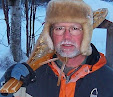
Bob Leis with book and sample of Red Lake stromatolite at camp
Take a deep breath. Does it make you thankful for stromatolites? Well, it should because without them there wouldn't be anything to breathe. Stromatolites are credited for first creating the oxygen that we and almost everything else need for life.
And incredibly, some of the first stromatolites to appear on Earth, a long, long time ago, were right at Bow Narrows Camp at the west end of Red Lake, Ontario!
The entire story is chronicled in a new book: Stomatolites: Ancient, Beautiful and Earth-Altering by Bob Leis and Bruce Stinchcomb with illustrations by Terry McKee.
Bob came to camp last summer to check out the Red Lake stromatolites which at 2.925 billion years old, are among the oldest in the world.
Let's start at the beginning, that is, the beginning of the Earth, 4.6 billion years ago. The brand new planet was nothing like it is today. Geologists call the first 800 million years the Hadean Era. Hadean as in Hades. The Earth's crust was molten, volcanoes everywhere and bombarded by lots of meteors.
The atmosphere was composed of carbon dioxide and methane. Temperatures were extreme and there was no life.
After 800 million years things had cooled down enough that the liquid rock turned solid and was largely covered by water. And right away, at least in geologic terms, life began and started what is called the Archean Era which lasted until 2.5 billion years ago.
The very first life is thought to have been single-celled bacteria that did not need oxygen. But before long, again in geologic terms, cyanobacteria appeared. These were photosynthetic and are the organisms that would eventually create our breathable atmosphere and left the mostly-trace fossils that we call stromatolites.
The cyanobacteria formed dense mats in shallow areas of water. As they continued to grow they calcified and trapped sediments in layers that became stromatolites.
A byproduct of photosynthesis is the production of free oxygen and for the first two billion years that cyanobacteria created free oxygen it was gobbled up by iron molecules to create iron oxides -- hematite and magnetite. This was laid down in layers called Banded Iron Formations. Those formations are what we mine today. So, along with thanking stromatolites for the air we breathe, thank them also for the steel that is the backbone of our modern civilization!
Once all the iron had been bonded with oxygen, the free oxygen went into the atmosphere and this began the Proterozoic Period 2.5 billion years ago to 500 million years ago. Then stromatolites declined because invertebrates and vertebrates evolved and ate them!
Stromatolites are still forming today but they are rare compared to ancient times.
Incidentally, the stromatolites that can be seen on the shores of Red Lake, right in front of Cabin 10  and all the way to Trout Bay, are among the oldest in the Canadian Shield. There is a photo of a sample from camp in the book.
If you have never heard of stromatolites and the role they played in life on Earth it is probably because their existence wasn't totally accepted until about 1960 although they were first discovered in the late 1800s. It just seemed unfathomable that life could have started so quickly, so long ago.
You can buy Stromatolites: Ancient, Beautiful and Earth-Altering at Amazon.com. It is published by Schiffer Publishing Ltd.
I got my copy directly from Bob Leis who hails from Northern Wisconsin. He autographed it with "Remember that pond scum rules!"
It is a beautiful book, full of photographs of stromatolites including polished specimens, and diagrams that help explain the whole history. I highly recommend it.
 Click to go back to our website
 Click to see the latest on the blog

Friday, December 31, 2010

Stromatolites another reason Red Lake is special

stromatolite on Red Lake, Ontario
As I understand it, the earth was created about 4.6 billion years ago.


Then, about a billion years later, the first cyanobacteria (also called blue-green algae) appeared. They were single-cell organisms and the very first lifeform that could photosynthesize, that is, they could use the sun's energy to create carbon-based sugar and in the process produce oxygen. That oxygen was released to the amosphere which up to that point was mostly carbon dioxide and other gases.


The cyanobacteria became incredibly abundant, virtually covering the Earth, and over another billion years ended up creating the very atmosphere we breathe today.


They were so numerous when they existed that they created thick stringy mats that became fossils. Those fossils are called stromatolites.


There are three places in Canada where stromatolites are found. One is on Red Lake, in fact, right on the shoreline in front of Bow Narrows Camp and also other locations nearby.

The other two are Steep Rock Lake in Atikokan, Ontario, and near Yellowknife, Northwest Territories.


They are also found in Australia.


This photo, which was taken just down the shore from Bow Narrows Camp, shows the stringers of fossilized algal mats.
For more on stromatolites visit this website at Queen's University in Toronto.

Click to go back to our website:


Click to see the latest on the blog:


Saturday, October 4, 2014

A stroll with Cork along the camp's waterfront

Click on this photo to see it in panorama.
Red osier dogwood and wild roses make a good frame for Cork's portrait
Fall colours as seen in front of Cabin 10
Cabin 10 shoreline. How many cabins have 3.6 billion-year-old fossils in front of them? See Stromatolites

Click to go back to our website
Click to see the latest on the blog

Thursday, February 25, 2016

Does this look really tasty to you?


If you looked at the two photos above and started salivating, phone the Guiness Book of World Records immediately. You must be the only whitetail deer in the world that can use a computer or smart phone!
Nothing makes a better late-winter snack to a whitetail than this stuff -- beard lichens or as most of us know it, Old Man's Beard.
Sometime in the past few billion years, algae and fungi made a deal. It was a "you scratch my back and I'll scratch yours," kind of pact. It probably goes right back to the time of the cyanobacteria that made the stromatolites which we talked about two postings ago. We can surmise that because cyanobacteria horned-in on the deal too. It went like this, algae and cyanobacteria photosynthesize but freeze while fungi don't photosynthesize but, at least some of them, don't freeze. In the words of Rick in Casablanca, "I think this is the beginning of a beautiful friendship."
Algae and fungi may have been the first to create symbiosis which was so popular it became the basis for life on Earth. Algae created food and fungi protected the algae and they called their partnership Lichens. It was pure chemistry and, speaking of chemistry, the lichens started making their own chemical concoctions, things like acids, that could crumble the rocks they were clinging to and helped keep competing vegetation away as well as predators.
Fast forward to just mere thousands of years ago and First Nation peoples, who must have had a ball trying out various "plants" for things, discovered that Old Man's Beard contained usnic acid. OK, maybe they didn't call it usnic acid back then but what they did know was Old Man's Beard was a great thing to use as a poultice on cuts and wounds. If you did so the wound didn't become infected. Today, we know that the beard contains usnic acid which is anti-bacterial.
Old Man's Beard is an example of an arboreal or tree lichen. There are many more species on the ground. According to my "bible" on the subject: Lichens of the North Woods by Joe Walewski, there are 700 species of lichens in these parts.
One of the most noticeable is the grey Reindeer Lichen (better known in our area as caribou lichen) which covers large areas of rock in the Boreal Forest, including all around Red Lake. Woodland caribou have evolved to eat this stuff and in fact, depend on it and arboreal lichens in the winter.
Caribou, and deer, have four-chambered stomachs which must have something to do with their ability to eat the lichens while humans cannot. Some thoughtful First Nation's person must have considered this and, according to my book, discovered that he could safely consume the three-fourths-digested lichens that were now in the fourth chamber of the caribou's stomach.
Like I say, I think they had a lot fun trying out things back then.
Reindeer lichen is one of the faster-growing lichens and lives for 30-50 years. By contrast Yellow Map Lichens can live for 4,500 years!
Click to go back to our website
Click to see the latest on the blog